Process-first
Every project starts with a real operational workflow, not with a pre-built service package.

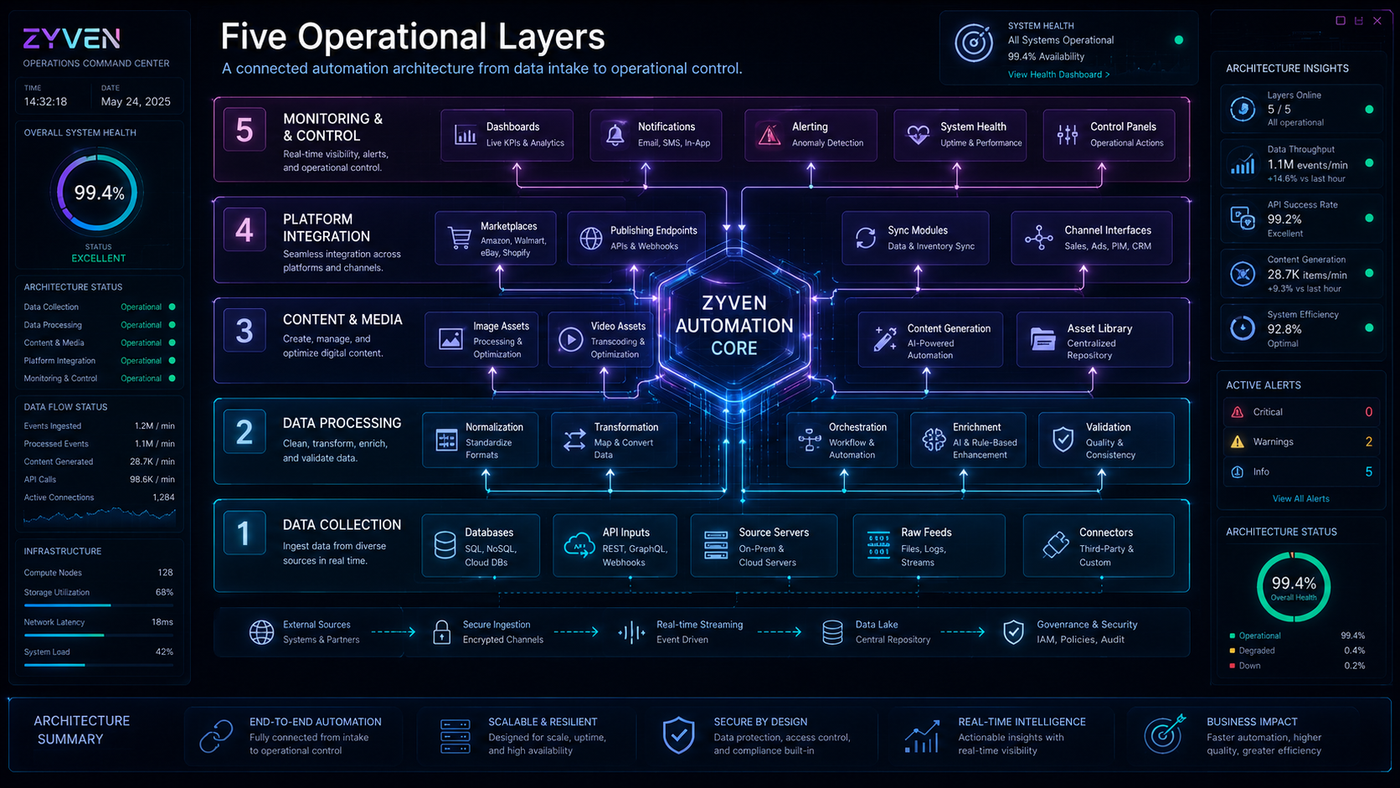
Zyven identifies manual operational processes and replaces them with structured automation systems — built for measurable output, consistency and scale.

Every system starts with one concrete operational workflow.

Every project starts with a real operational workflow, not with a pre-built service package.
We focus on time saved, error reduction, higher output and operational consistency.
Each system is designed as reusable infrastructure that can expand across further processes.
The solution is not always hiring more people. Often, the solution is a better system.
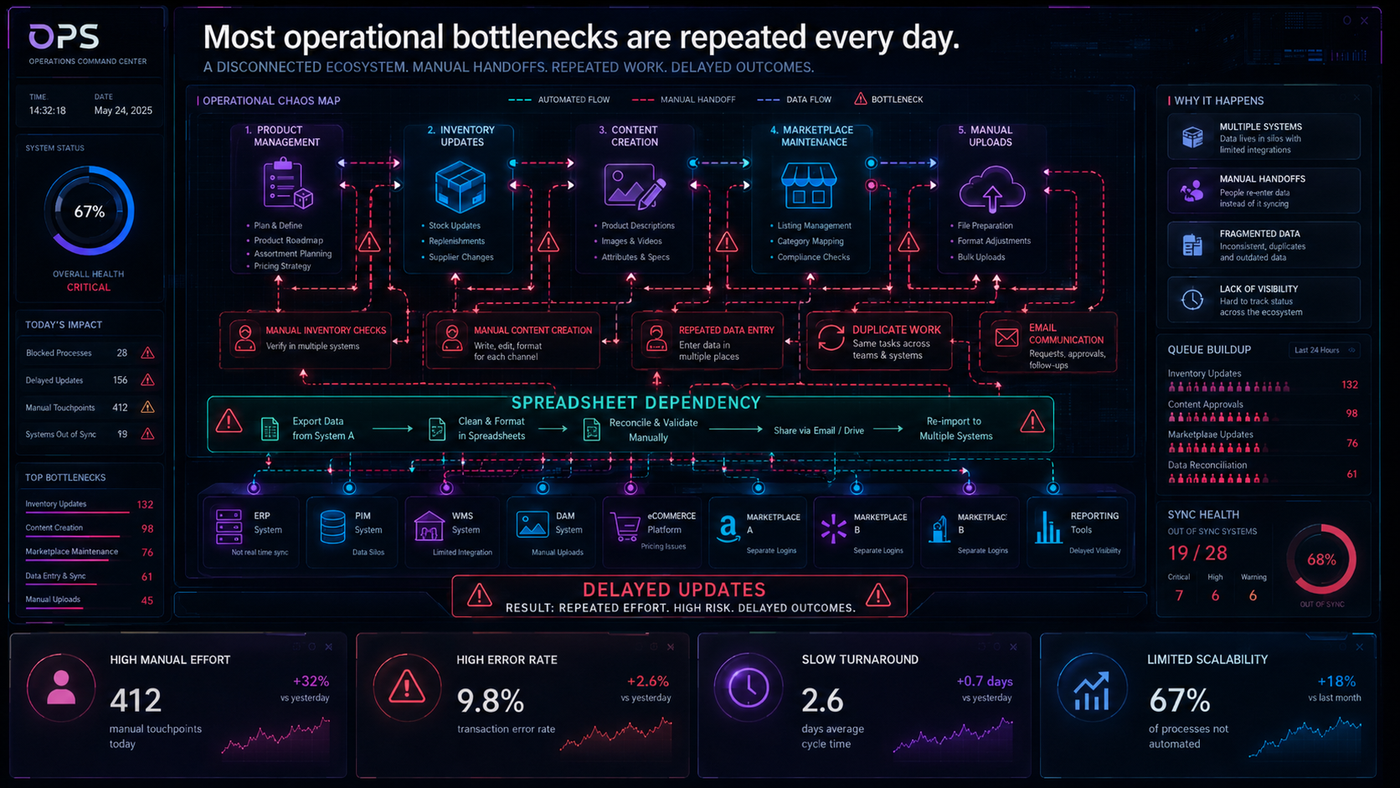
Raw data, inconsistent fields and manual formatting slow down product operations.
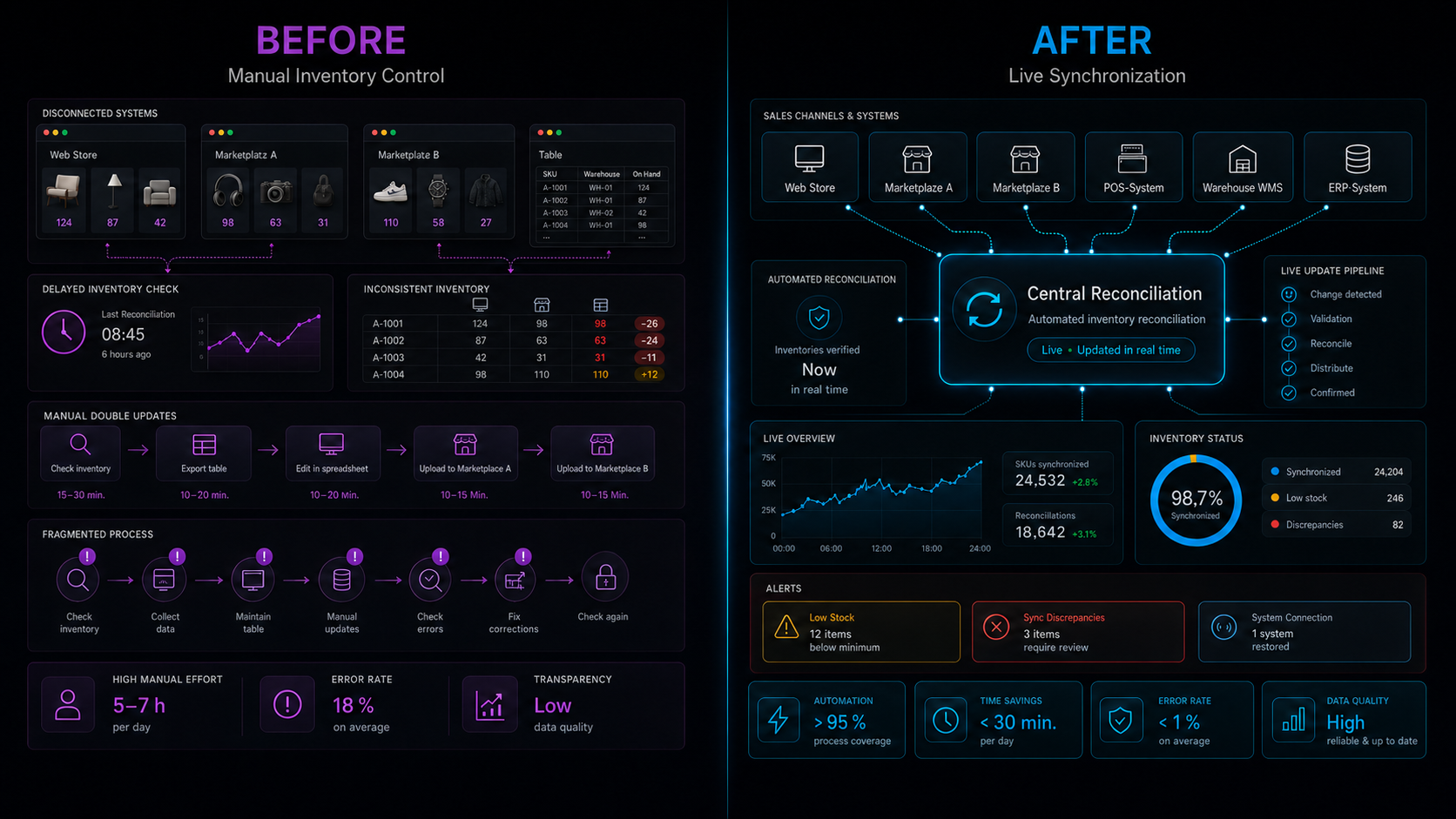
Disconnected platforms create delayed stock updates, errors and unnecessary control work.
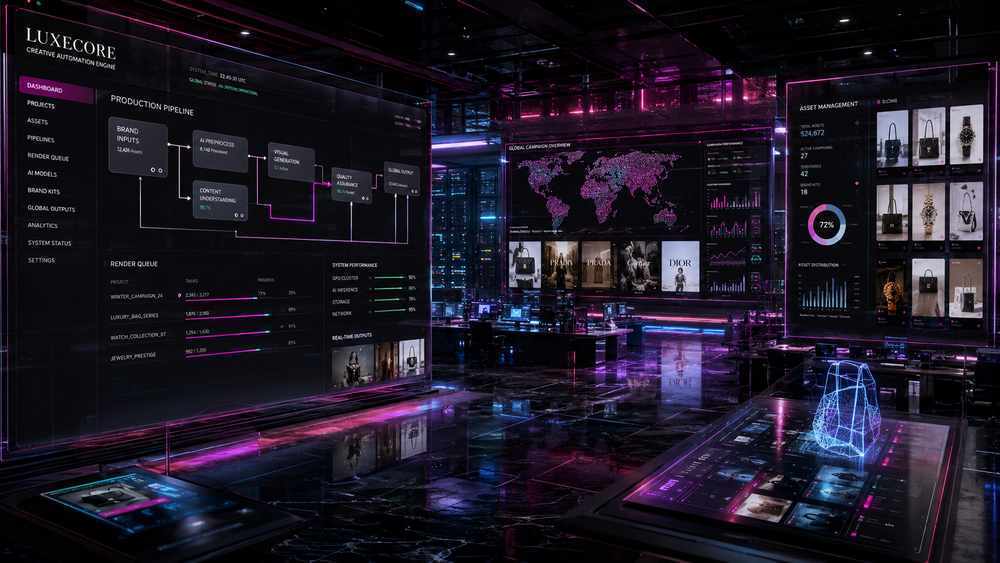
Manual content production limits output and makes consistent branding difficult to maintain.
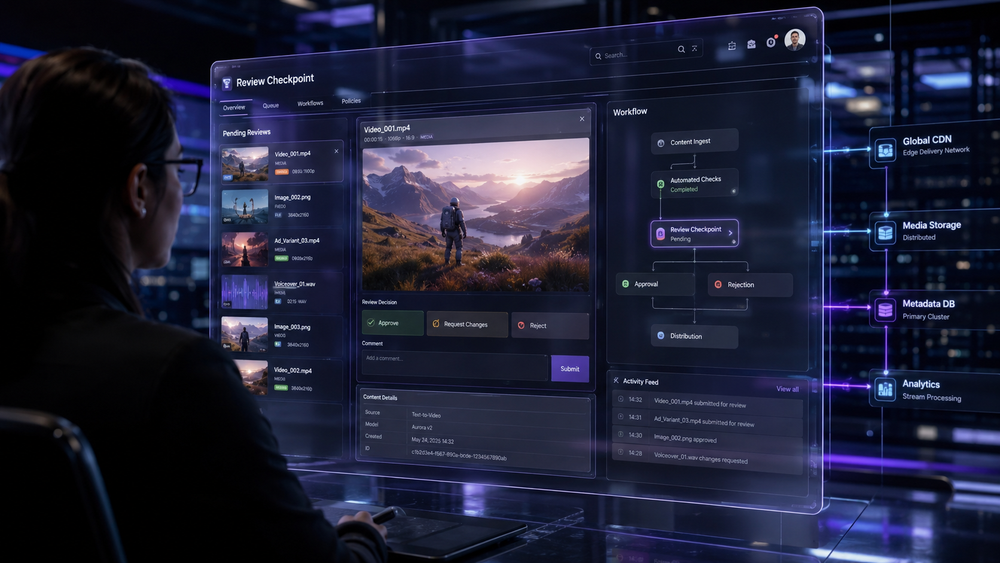
Automated content creation from existing assets with human quality review.
Brand-consistent visual production based on references and guidelines.
Monitoring, synchronization and stock updates across connected and disconnected systems.
Automated transformation of raw data into company-compliant product information.
Unified pipelines, notifications and monitoring for distributed business systems.
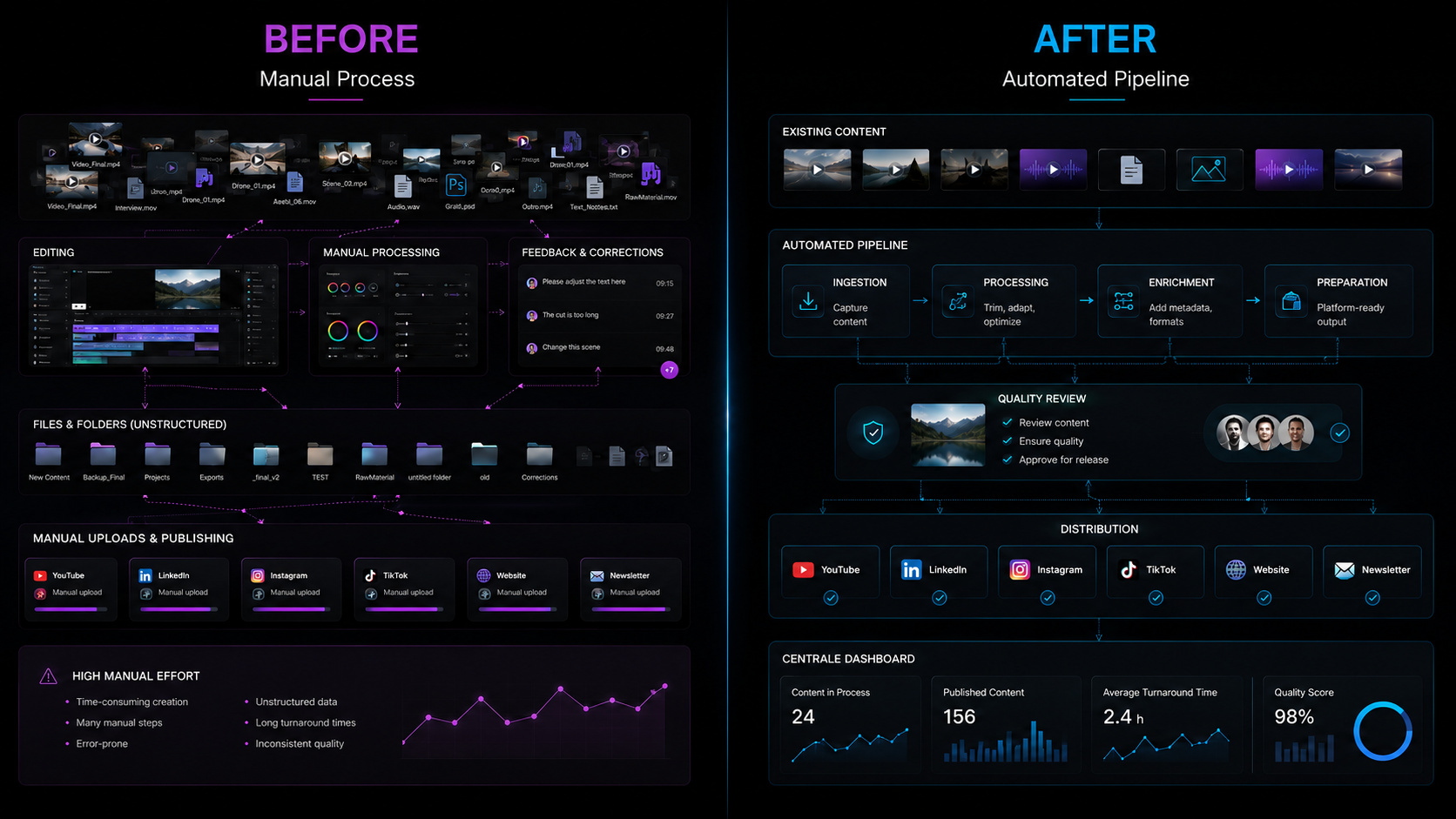
Continuous social content creation requires manual editing, platform preparation and repeated quality checks.
A structured pipeline generates content and reels from existing media, product data and brand rules — with manual quality evaluation before publishing.
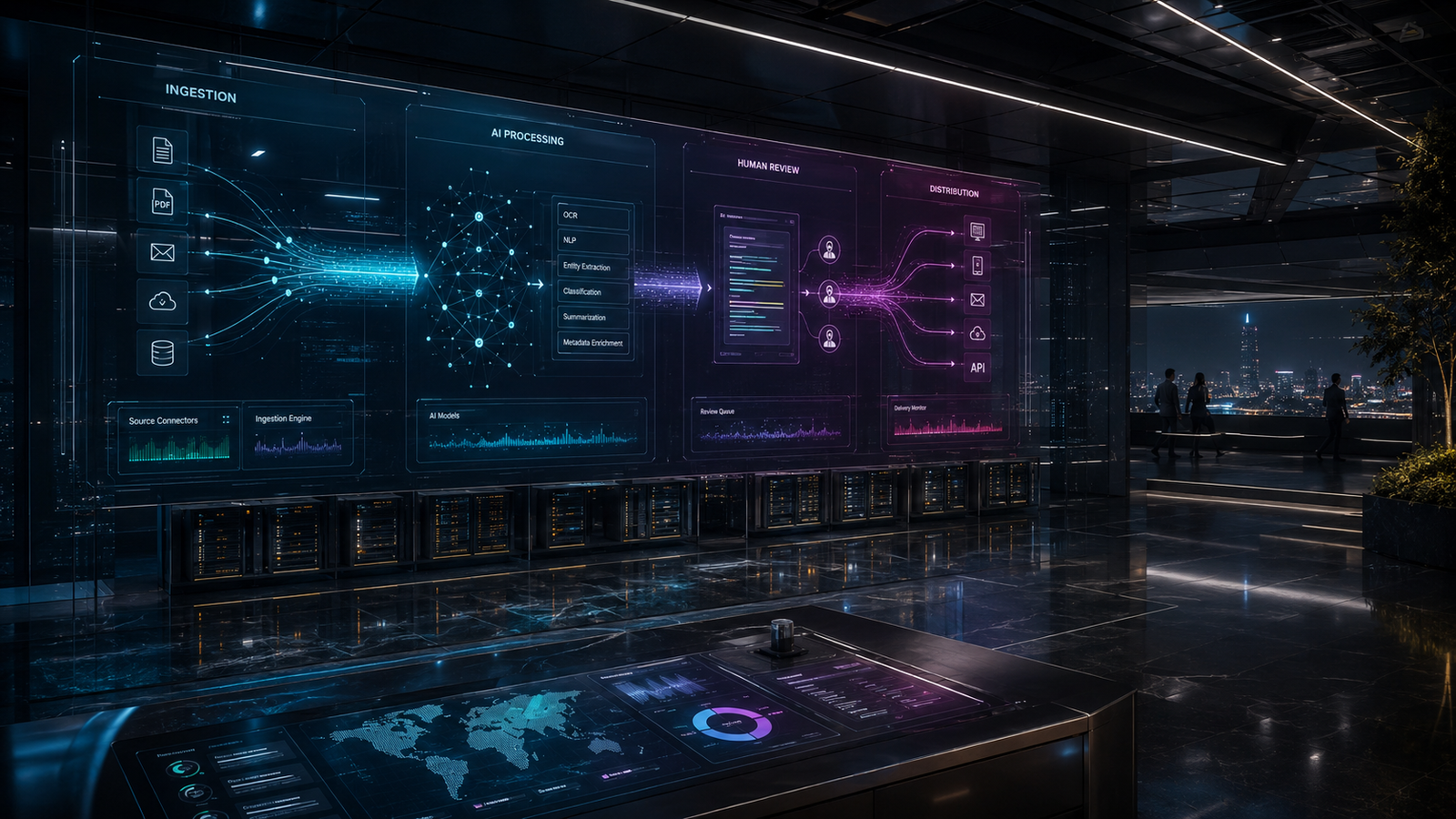
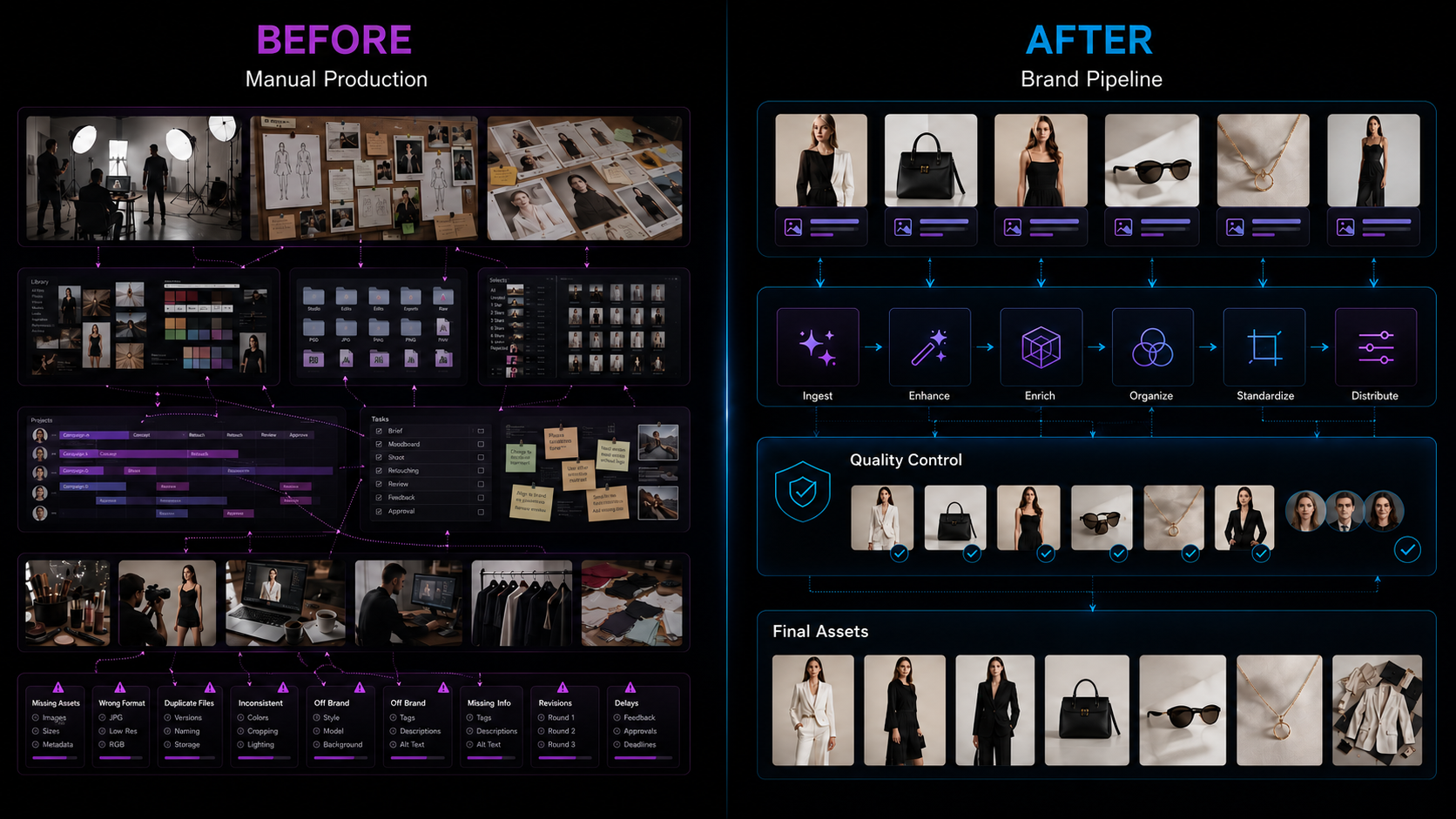
High-end visuals are expensive, slow to produce and difficult to keep consistent across large output volumes.
An automated generation system creates premium visuals from descriptions, references and brand guidelines, with manual approval controls.

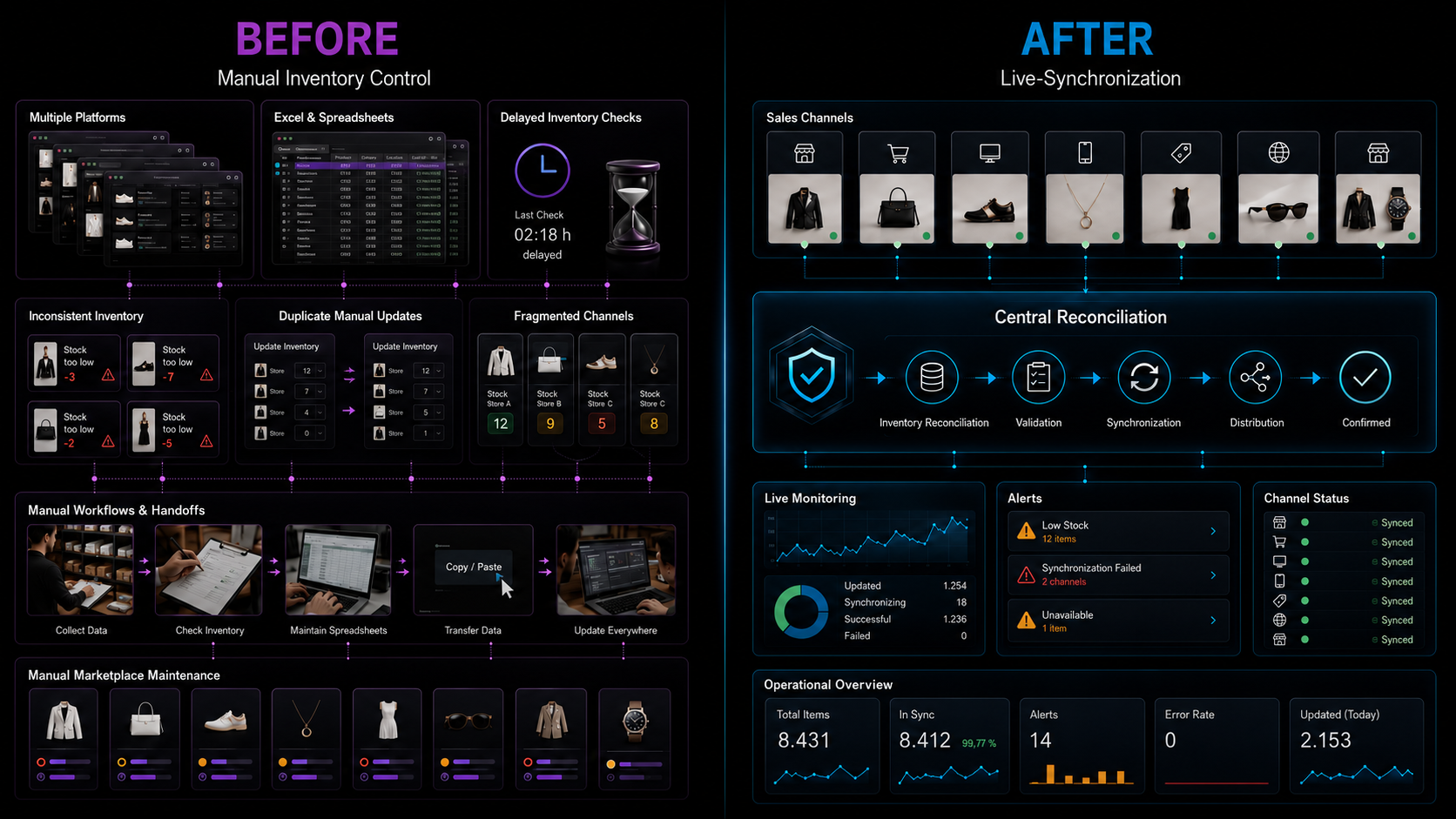
Disconnected platforms create delayed updates, inconsistent stock levels and repetitive manual control work.
A stock automation system monitors, verifies and updates product availability across systems — with or without direct API access.
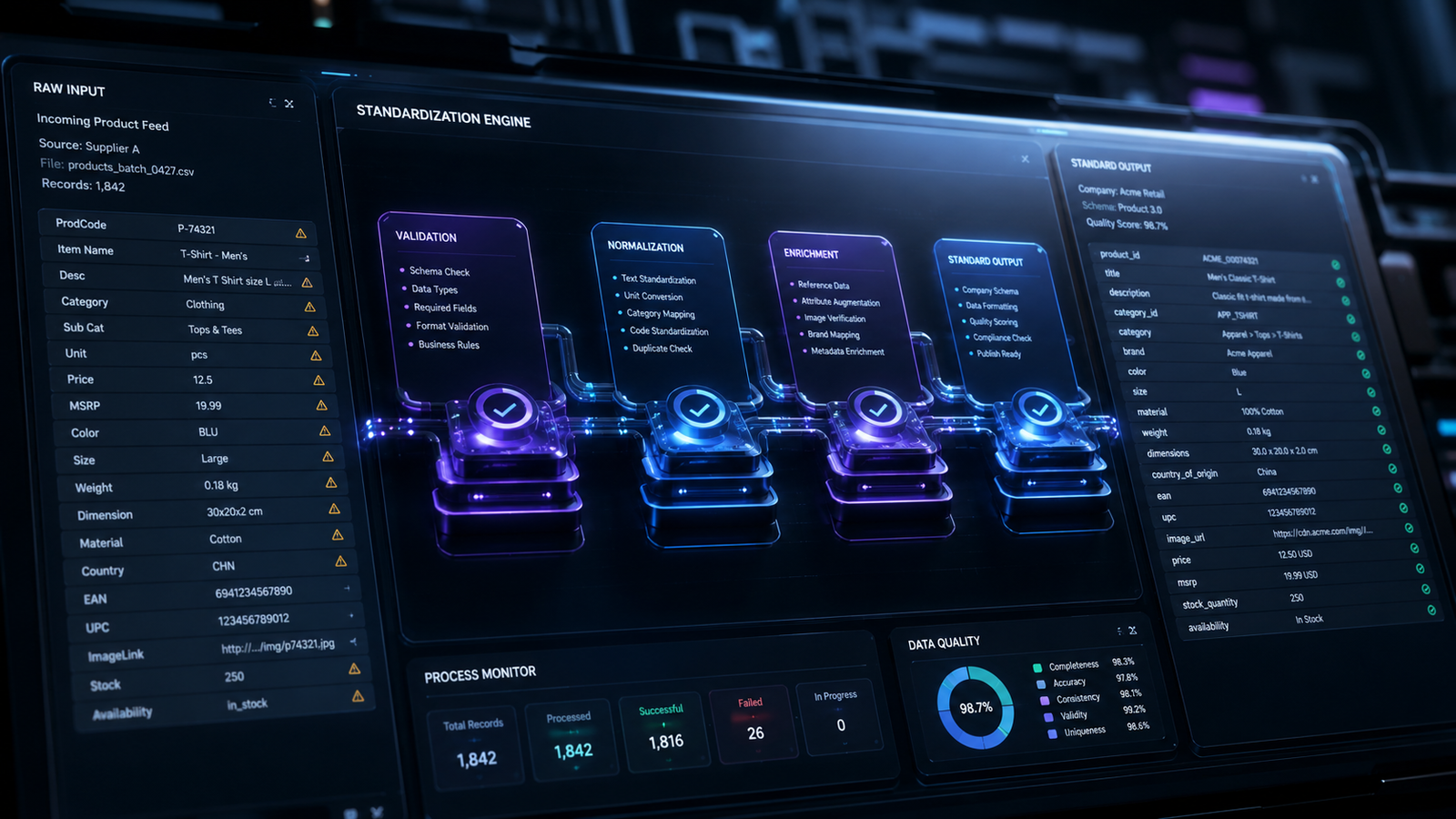
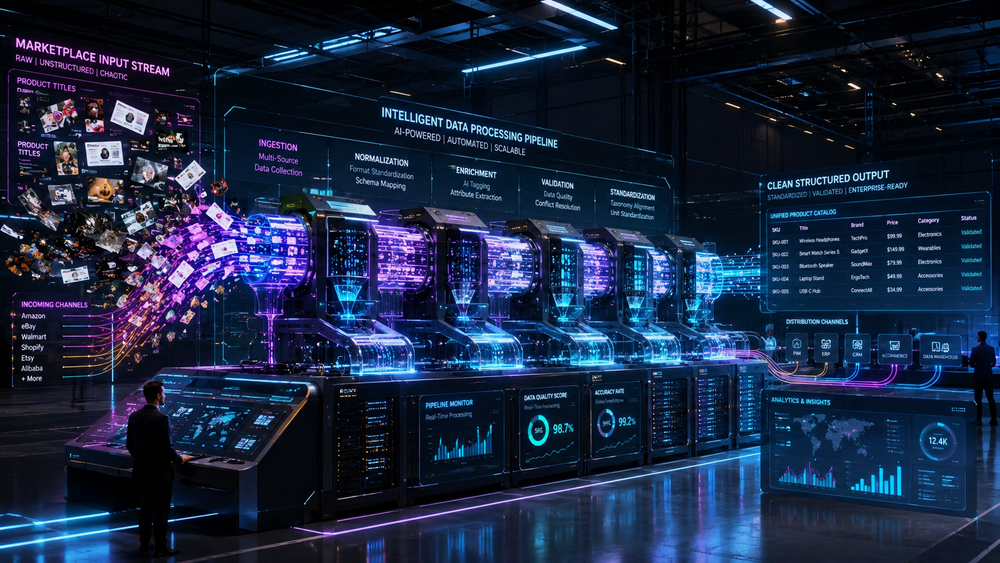
Raw product data from different sources often leads to inconsistent fields, slow product creation and manual correction work.
An automated processing engine evaluates, standardizes and formats product data based on company rules and required output structures.
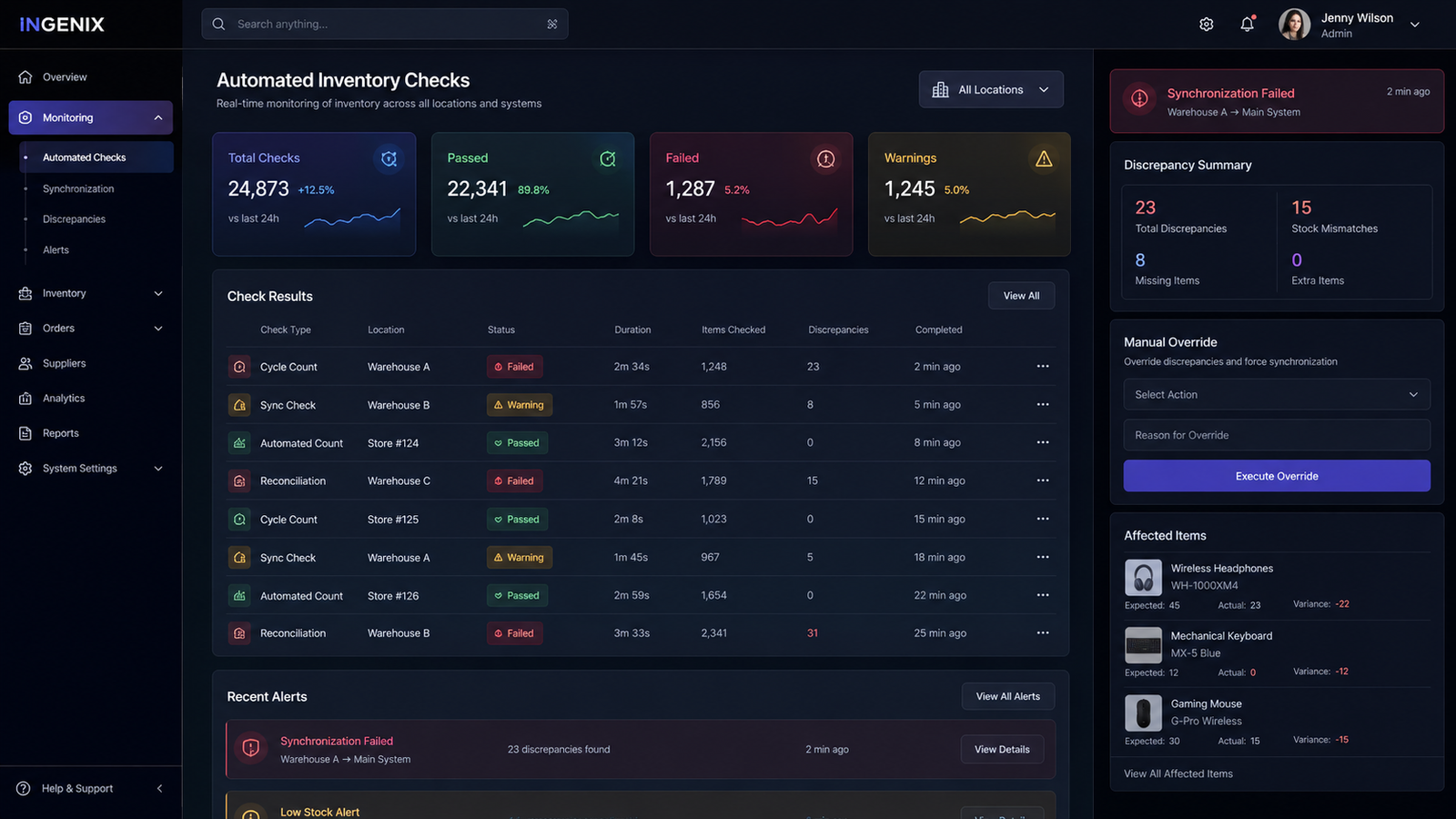
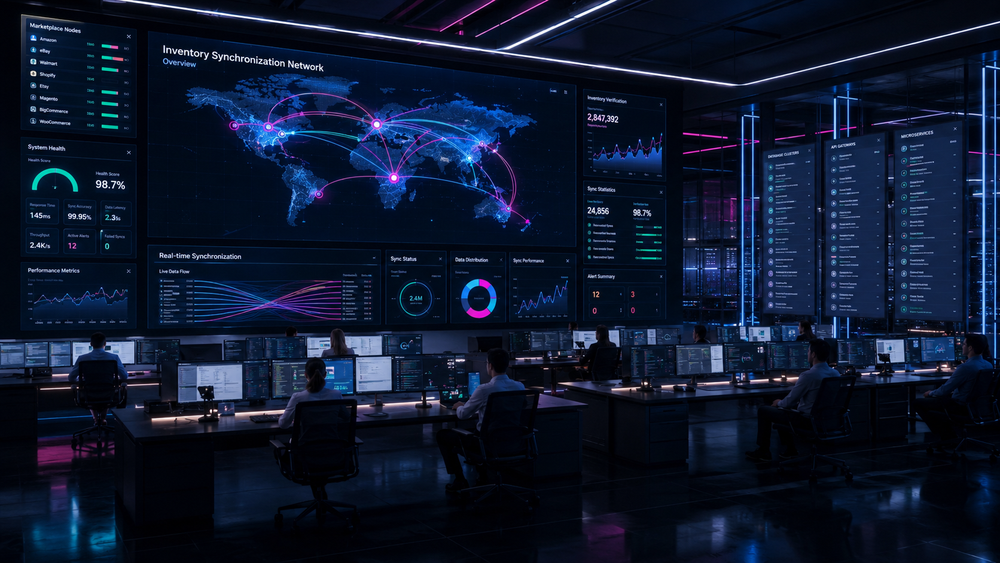
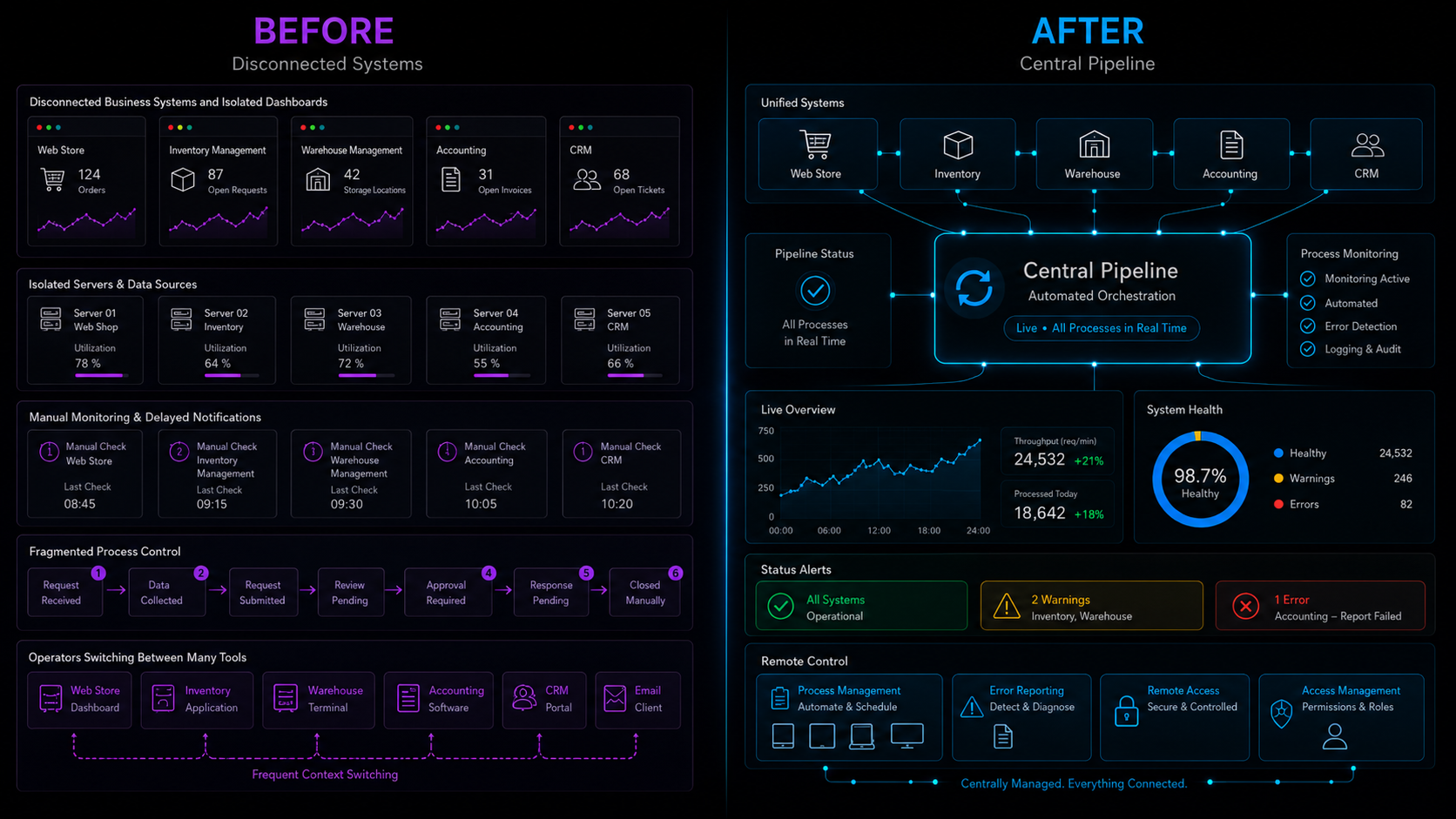
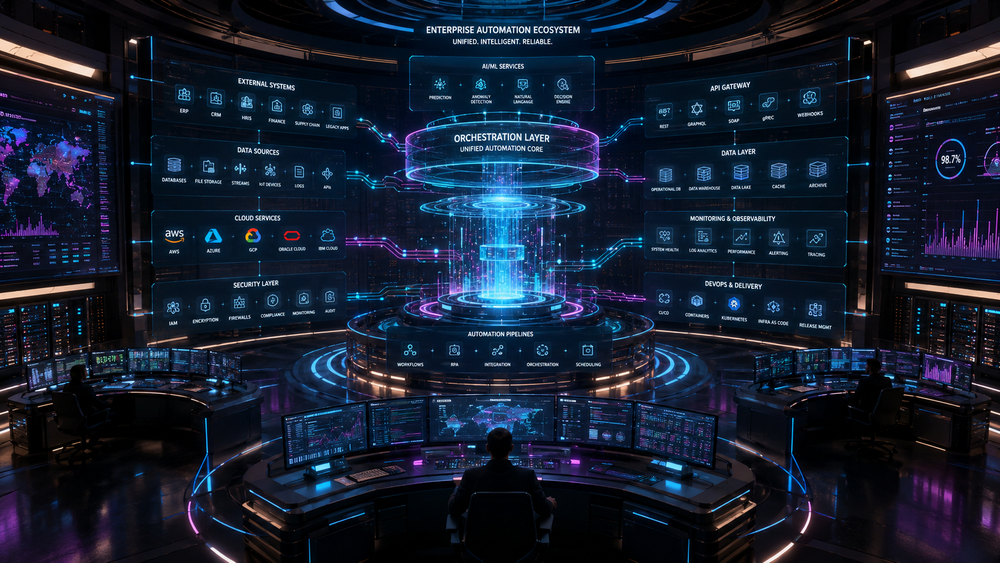
Disconnected systems, external servers and missing status communication create delays, monitoring effort and operational uncertainty.
A centralized automation layer connects existing systems, monitors execution, sends notifications and enables external process control.

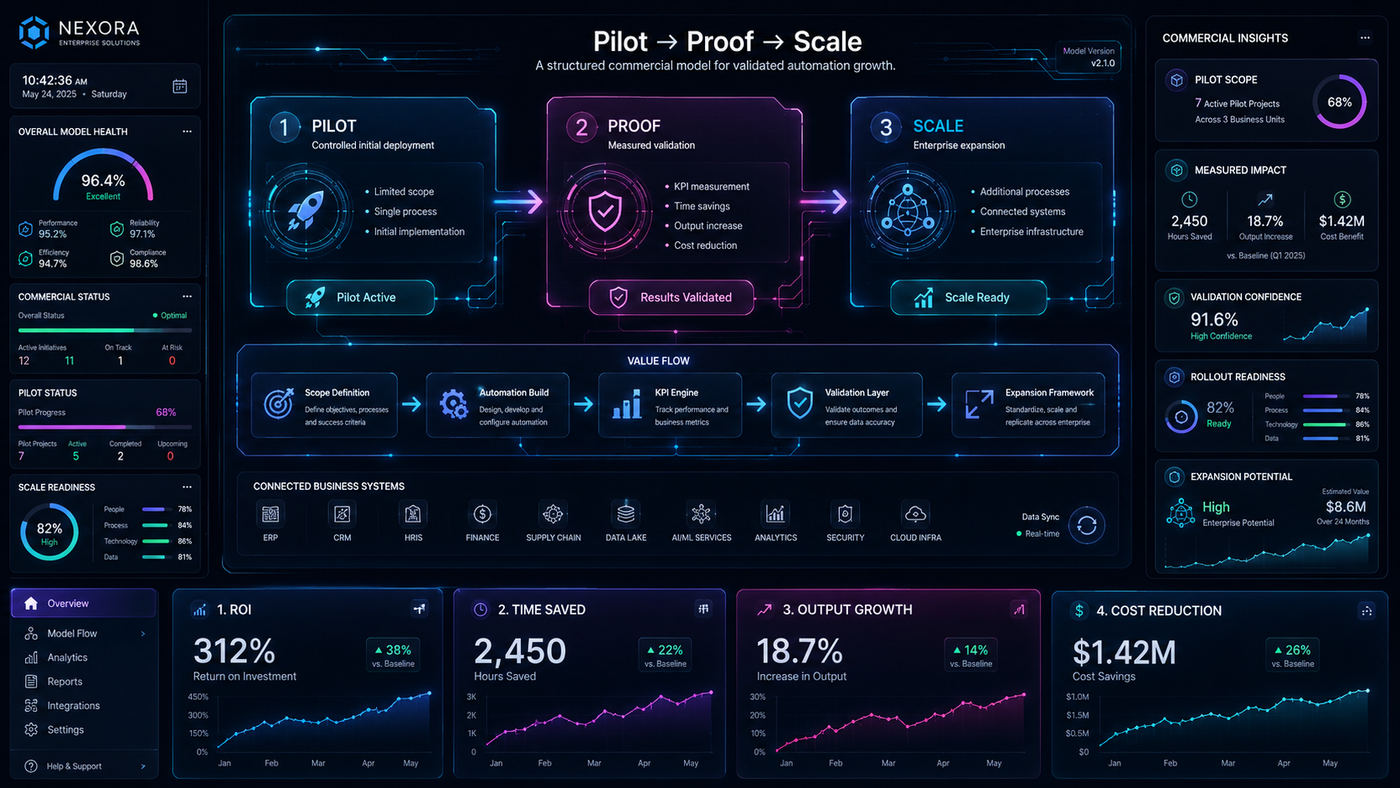
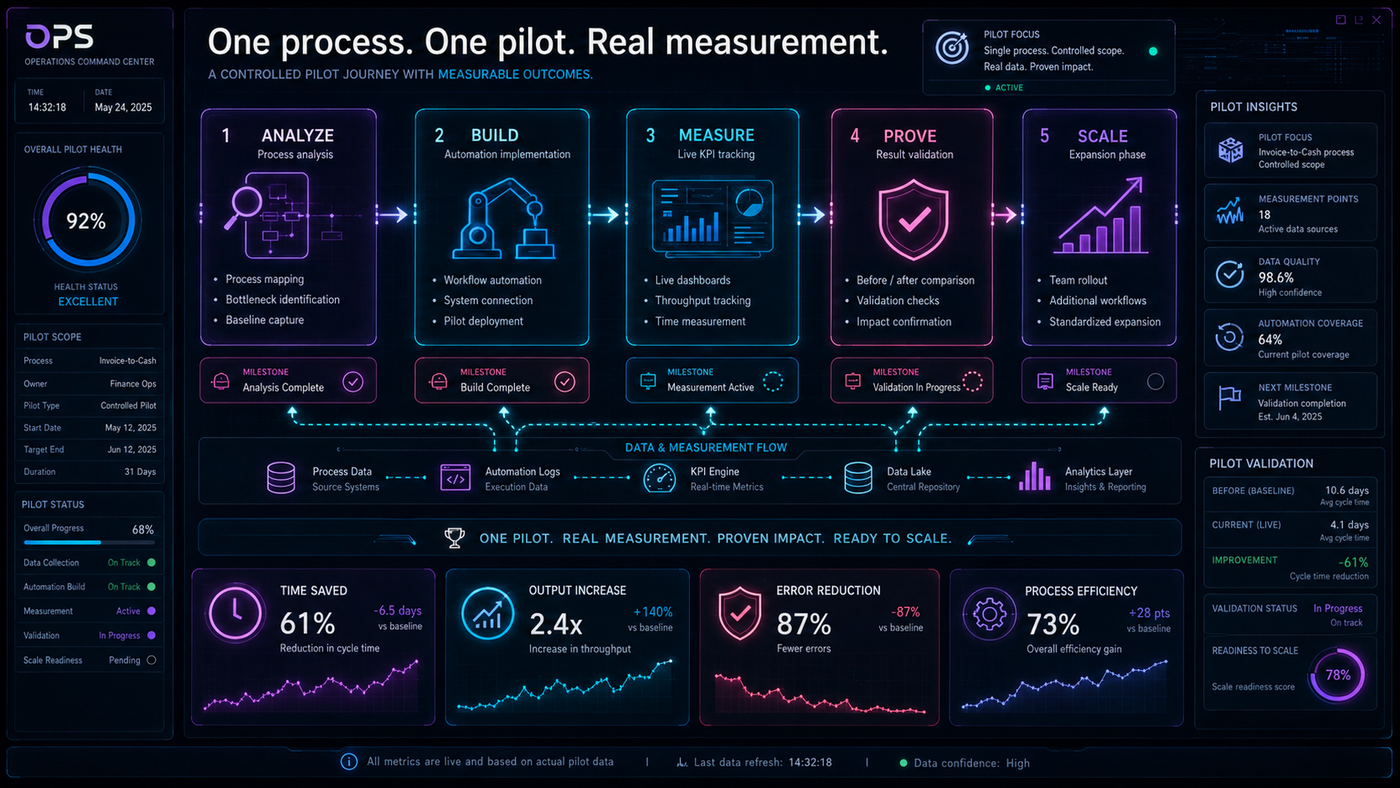
We identify one repeated manual workflow with measurable impact.
We define input, output, success criteria and boundaries.
We build the automation layer and run it against the process.
We compare manual effort, errors, output and stability.
Once proven, the system expands across further processes.
We start with a clearly defined pilot and prove what the system can do before expanding into broader automation infrastructure.
We avoid broad retainers where scope, value and measurable output remain unclear.
The first automation is narrow, measurable and connected to an existing workflow.
Only proven systems get expanded into broader operational infrastructure.
Tell us which manual process is costing your team the most time. We define a pilot scope and show what can be automated.